

The Ultimate Resilience Strategy
When we serve others, we don't just change someone else's life - we also change our own.

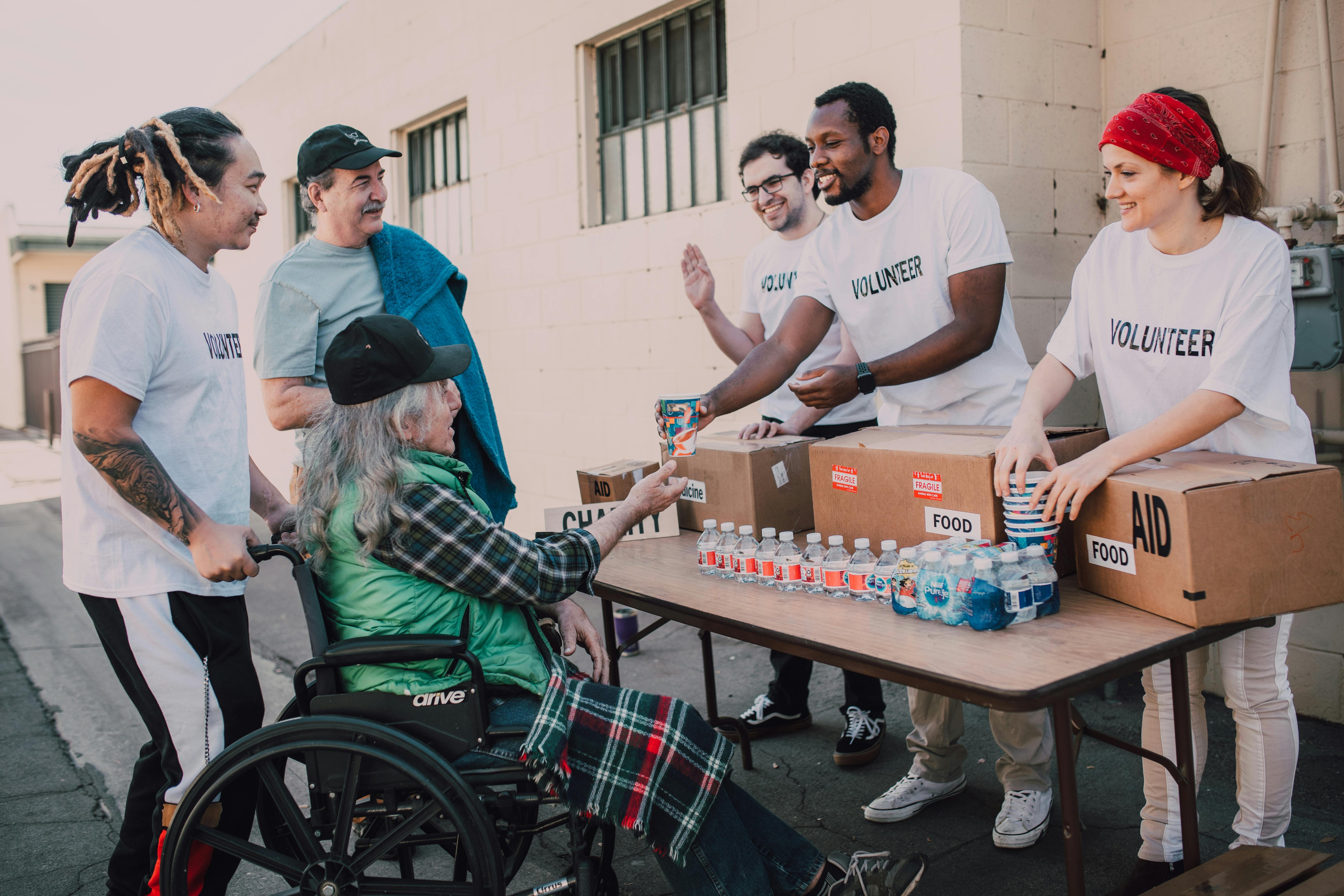
Since my diagnosis, I have found my greatest joy in helping others find hope in tough times.
When someone tells me how much my story means to them, or I hear from a Hello, Adversity reader that a post has inspired them to make a long-overdue change, it’s a rewarding feeling.
The way I see it, being transparent about the ups and downs of my journey is my way of giving back to the world. I don’t share what I share to toot my own horn about how resilient I am; I do it to serve others.1
It took many years to recognize the power of my personal story. I didn’t think I was anyone special or that my life experience was instructive! But once I started writing about my journey, and I saw firsthand the positive impact my words were making in people’s lives, especially those newly diagnosed with limb-girdle muscular dystrophy (LGMD), it became clear that I had discovered something special. Something life-affirming.
In time, using my pain for good healed my soul and became my life’s mission.
It’s a bit of a paradox
Serving others is one of the most powerful tools in our adversity toolkit, but on the surface, it seems almost counterintuitive.
When life gets hard, it’s easy to dwell on our problems and not anyone else’s. Although we know other people — including our friends and family — might be struggling too, we become so focused on trying to survive the day that we overlook the suffering all around us.
It’s not selfishness as much as self-preservation. Our burdens are simply exhausting; sometimes, we just don’t feel like we have the emotional strength to empathize with another’s pain.
But herein lies the paradox: it’s at this exact moment, in the midst of our personal turmoil, when serving others becomes so valuable, both for them — and for ourselves.
How it impacts us
When we lend a hand to someone in need, we transcend our pain and find common cause with other weary travelers navigating life’s storms. When we make someone else the center of our focus, we give ourselves a much-needed reprieve (however brief) from the adversity we face.
These brief “reprieves” compound over time. Research shows that helping others boosts self-esteem, reduces anxiety, and even increases happiness.
Do a good deed, and it pays back severalfold.
It also restores agency over our lives. When so much feels beyond our control, giving back allows us to be proactive, not reactive. It becomes a powerful antidote to helplessness.
But perhaps the greatest benefit of service is how it imbues us with a sense of purpose. When we know we’re making a difference in someone’s life, even as we deal with our own struggles, we alter our personal narrative. Our story no longer has to be defined by the negative impacts of adversity; it can instead be defined by love, empathy, and kindness.
In carrying another’s burdens, we find the strength to carry our own.
This was a key perspective shift for me. The more I passed along what I learned on my journey, the more I felt able to endure my pain. Even the darkest moments became a source of strength and empowerment.
How it impacts others
Whether you give back by sharing your story (like I did), teaching a life skill, or volunteering your time, every little bit helps to make the world a better place.
If you’re still going through tough times, that’s okay. It doesn’t disqualify you from helping others; in fact, it may just make you the ideal person to walk alongside someone else’s pain.
In many instances, “wounded healers” are the most effective healers. No matter your hardship, you can serve someone in the same situation as you, or someone two steps behind where you are now.
You understand their future fears and their present despair. You’ve felt their pain and can relate to their self-doubt. And your example is living proof that whatever they’re going through isn’t unique to them.
For example:
If you recently lost a job, you can support a friend who just lost theirs.
If you live with a chronic disease, you can share how you’ve learned to cope and the resources that you found helpful.
If you’ve experienced addiction, you can become a sponsor or attend a support group with someone to make them feel less alone.
Sometimes, serving others is simply pulling them out of the water onto your lifeboat until you both can be rescued.
If you want to serve in a way unrelated to what you’re going through, that’s fine too. You can work at a soup kitchen, clean up a local park, or mentor a high school student. Or, if pressed for time, you can donate to a cause you care about. All that matters is that you do something to think beyond yourself.
Small actions, big results
This topic has been on my mind a lot recently. I have a lot going on in my life, and my usual disease-related frustrations have affected me more than usual. But every time I sit down to write, or I talk to someone going through a tough time, I’m reminded of why I do what I do.
Building my life around service has been one of the greatest decisions I’ve ever made. I firmly believe that it’s the ultimate resilience strategy.
But the best part is how simple it is. You can literally start today — no expertise or advanced preparation required.
If you’re not sure how, start small. Serve your family. Serve a friend. Serve your local community. Truly, that’s enough.
You don’t have to change the whole world to change someone’s world.
Do that, and you’ll find a joy that adversity can never take away.

The Inner Compass
My friend Lawrence Yeo from the More to That newsletter is out with a new book: The Inner Compass: Finding The Courage to Trust Yourself.
The Inner Compass explores how to build lasting self-worth and contentment by grounding it in ourselves, not through external validation.
I admire Lawrence’s writing for his in-depth reflections on the human condition, including our relationship with money, finding purpose, and navigating adversity. (He’s also an amazing illustrator.)
To get a feel for how he writes, “Everything Will Be Okay” is one of my favorite posts!
Feeling stuck? Sign up for a Hello, Adversity Clarity Conversation.
If you missed my announcement from a couple weeks ago, I am now offering 1-hour coaching calls for anyone looking to “get unstuck” from the daily grind of life and develop an action plan for how to move forward.
If you have a goal you want to achieve, need a supportive sounding board, or want to seek an outside perspective on a challenge you face, let’s work together!
The only way I’m comfortable sharing my story is if someone can get something out of it. The last thing I want to be is the “inspirational disabled guy” who made the brave decision to get up in the morning to face the day. Barf.
I learned this when my mother developed dementia. I had become her POA & the person she depended on. It was tough because our relationship wasn’t the best to begin with. She had to move into memory care which was very hard. But we started doing a Meals on Wheels route together. I thought it would be a good way to spend time together doing something productive & different. And take the focus off of our own situation. It worked. Took awhile to get my mother on board as she thought it was ridiculous at first.🤣
Such a great post and reminder, Chris. So glad you're here sharing your story and are a part of the amazing, supportive community so many of us have found here. I know I've said it many times, but it bears repeating that your story and coping strategies have helped me a ton.