

Boston Dreams
Loss, acceptance, and what happens when you stop chasing the future

Upgrading to a paid subscription makes it possible for me to grow Hello, Adversity and continue writing. Any support you can provide is greatly appreciated.
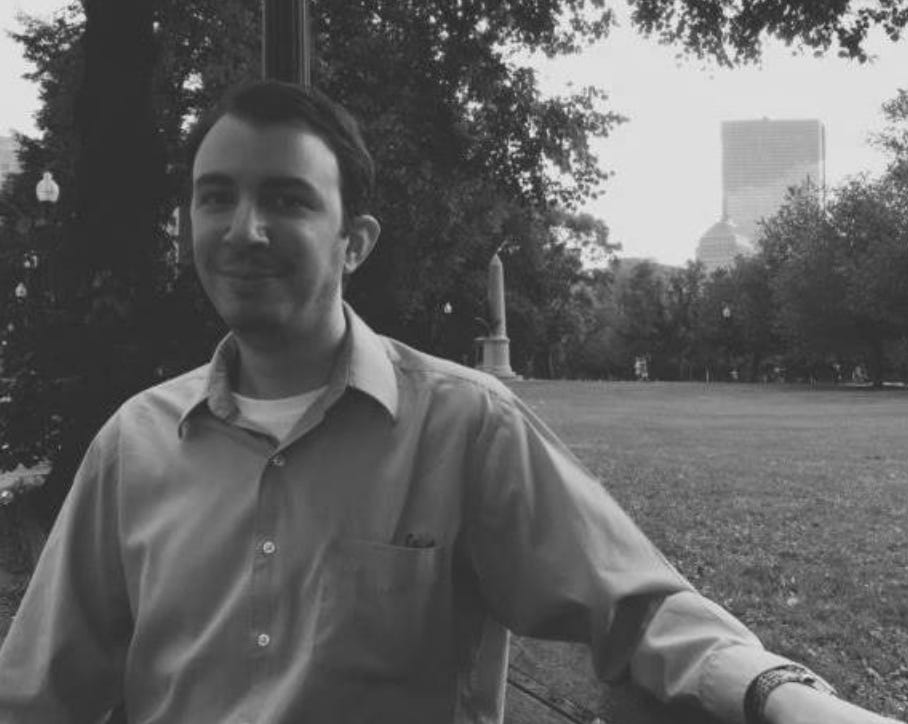
Every so often, I have a dream that I’m back in Boston, my home from 2004-2016. I’m usually doing all of my former favorite activities — grabbing a beer with coworkers at our local watering hole, writing furiously on my laptop at the campus coffee shop, lounging on the couch watching football with my roommates in our triple-decker apartment in Brighton.
In these dreams, I have full mobility. I walk. I run. I climb stairs. I’m always eating, and strangely, almost always getting the mail. Although yes, I do appreciate the chance to use my legs again — even if just for a few minutes — it’s overshadowed by my joy for being back in a city that means so much to me.
I’m sure someone out there will read this and immediately start to interpret the symbolism (I once dreamt a peacock stole my laptop and escaped on our lawnmower — that might be a better use of your skills), but I will say that when I have a Boston dream, it tends to follow a rough day, as if my mind is fleeing to the past to avoid the complex realities of my present and future.
These dreams used to frustrate me. I’d wake up longing to be back in my former city. But now, they don’t haunt me the way they once did.
The dreams may have stayed the same, but I’ve evolved.
I grew up in West Hartford, Connecticut, a town situated 118 miles from New York City and 106 miles from Boston. When you’re that close to two major cities with such opposite — shall we say, personalities — you have no choice but to align with one or the other. Many in my hometown prefer the skyscrapers and bright lights of New York; others the cozy, cobblestone charm of Boston. (Those who say, “I like both cities equally!” can never be trusted.)
My choice was made for me years before I was born when my dad went to New York City for the first time and got caught in a traffic jam. From then on out, the Anselmos were a Boston family. In middle and high school, we visited the city frequently for day trips. I loved history, so it was the perfect place to learn about our country’s colorful revolutionary heritage. From the Freedom Trail to Beacon Hill to the Paul Revere House to the Bunker Hill monument in Charlestown, I spent endless hours fascinated by the narrow streets, old architecture, and nation-shaping events that took place where I stood. The food at Quincy Market didn’t hurt either.
So when it came time to choose a college, my decision was easy — I was going to Boston.
Thus began a twelve-year stint in what was, is, and will always be my favorite city. A place that shaped who I am today, and who I’m still striving to become.
I spent my first four years in Boston attending Northeastern University, which straddles the Fenway, Mission Hill, Back Bay, and Roxbury neighborhoods. At this time, I had yet to experience any symptoms of my muscle disease, limb-girdle muscular dystrophy. Although I was aware of my diagnosis —the result of a ten-month diagnostic odyssey following a car accident my senior year of high school — I was still under the impression that I’d live a normal life. The doctors at the time suggested that I might eventually experience some muscle weakness, but it would happen years, maybe decades down the line. I filed it away as a problem for future Chris to worry about.
Life, unfortunately, had other ideas.
Looking back, I’m glad I didn’t carry around the emotional weight of my impending muscle weakness; I was having too much fun. In October 2004 — one month into my freshman year — the Red Sox broke their 86-year curse and won the World Series. Watching the neighborhood surrounding Fenway Park nearly burn to the ground was a surreal experience. Over the next four years, I attended parties all over the city and went to dozens of sporting events and music shows. And on days when I wanted solitude, I walked off campus and ventured around the city, exploring new streets and neighborhoods I didn’t know existed. For an introvert like myself, Boston was the perfect place to escape college life for a few hours and disappear.
My time at Northeastern wasn’t all smooth sailing, however. I struggled with demanding coursework, the standard relationship issues young adults face, and figuring out what the heck I was going to do with my life after I graduated. I also wrestled with my faith and my place in the world. Depression and anxiety made their presence known on occasion, although I was able to keep them at bay, in no small part due to the close group of friends I made at school. We never went more than a few minutes without laughing.
College in Boston was, on the whole, a positive experience — my last days of bliss before reality hit me squarely in the face.
The demarcation point between ability and disability occurred in June 2008, four weeks after graduating from Northeastern, when I felt burning in my calves while going for a run after work.
From then on, my life — and my relationship with Boston — changed forever.
In the months after my run, new symptoms began to surface. Carrying a chair up one flight of stairs left my legs trembling. Running to catch a subway train nearly sent me crashing into a row of newsstand kiosks. Most concerning of all, my limbs felt increasingly sluggish, stiff, and tired — as though they were slowly forgetting how to move.
At first, I thought I was just fatigued from working myself to the ground to make ends meet. But in reality, I was starting to weaken.
In 2009, a neurologist at a prestigious Boston hospital reconfirmed my dysferlinopathy diagnosis — as it was known at the time — but his assessment came with a disturbing addendum. The disease was no longer a future worry — it was manifesting now, and I had, at most, a decade left to walk. Devastated by the news, I left the hospital in a daze, fighting back tears.
In an instant, my outlook on life changed, and with it, my hopes for the future.
As I processed my new reality, my disease progressed uninterrupted. By early 2010, I could no longer run. By fall, I could no longer climb stairs without a railing. And a few months after that, I began falling, my knees giving out without warning.
These traumatic milestones shattered what little self-confidence I had left.
The depression and anxiety I’d battled before returned — only this time, they were here to stay. Sleep became elusive. I withdrew from family and friends. My fear of falling became so all-consuming that I rarely left my apartment, except to go to work. The constant tension turned me into a cauldron of stress, which eventually boiled over into panic attacks, one of which was so severe it landed me in the ER.
Boston, a city I once loved, had become the scene of my undoing.
But in the depths of my despair, Boston never abandoned me. I just had to give it a chance.
A month after my first fall, I obtained my first piece of adaptive equipment — leg braces that went up to my kneecaps. Although they made me self-conscious, there was no question that they provided added stability when I walked. My braces didn’t eliminate the risk of falling, but they gave me just enough confidence in my mobility to venture out more.
With my newfound freedom, I went for long walks. I revisited neighborhoods I hadn’t seen in years. I sat in silence on park benches overlooking the harbor and contemplated life.
Even though falling was an ever-present danger, I came to realize that I had to step out into the great unknown at some point and live. I couldn’t be cooped up in my apartment, wasting away, anymore. I had to find a balance.
My Boston walks were shorter than in my college days, but even limited time in the city reminded me of my younger joy — a joy that was still accessible, even if not carefree. It was like talking to an old friend and picking up the conversation right where we left off years before.
Although my leg braces soon became less effective at preventing falls, necessitating the purchase of forearm crutches in early 2013, these walks helped me contemplate a future that wasn’t defined solely by disability.
More than that, they gave me the courage to be social again — to show up, to connect, to say yes when new opportunities arose.
This is where Boston truly shined.
Through the magic of serendipity and the persistence of networking, I built a support system of friends and coworkers who changed the course of my life, people I could lean on to navigate tough times. And because I had recently begun writing and speaking about my healthcare journey, I met patients and researchers in the Boston biotech community who inspired me to redirect my career towards helping others living with rare diseases.
Feeling a measure of stability for the first time in years, buoyed by the love and support of so many, I left my job in August 2014 to attend business school at Boston College. For all that I had lost, Boston had given me hope in the form of new connections, new paths to traverse, and a new purpose. I may not have been able to enjoy all the city had to offer anymore (those stubborn stairs and all), but it helped show me there was more to life than just my mobility.
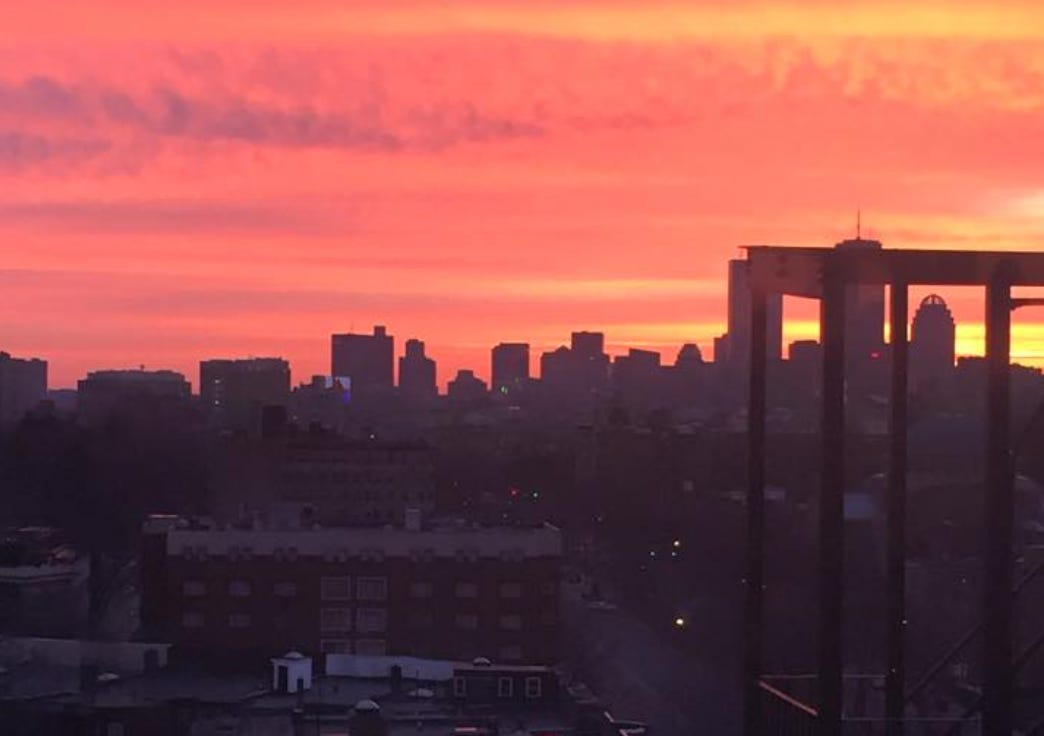
I left Boston in July 2016 after my graduation from BC. By this point, I was a shell of my former self physically. My crutches — just like my leg braces several years prior — had become ineffective in stopping my falls, and I could barely get up from a seated position without assistance from my classmates. A couple days before graduation, I slipped and fell on the hardwood floor in my apartment and was bruised and limping for weeks after. My lease was up that August, so I figured I’d return home to Connecticut until I figured out what to do next. At worst, I thought, I’d be home for a couple months.
That was nine-and-a-half years ago.
Never in my wildest dreams did I expect to be away from Boston for so long, but now I see that it was probably for the best. In the years since, I’ve transitioned to using a wheelchair full-time, and my condition has advanced considerably. I knew the weakness would get bad, but I didn’t quite expect it to get this bad, this soon.
No one strives to live with their parents in their 30s, but it’s an opportunity that I appreciate more and more each day. I still hope to live on my own again someday, but I’ll always be grateful for this extra time I’ve had with them. It reminds me of the Tim Urban essay, “The Tail End”, which points out that by the time we turn 18, we’ve already spent most of the time we will ever spend with our parents. Although this disease has taken so much from me, every labor-intensive minute spent getting dressed, washed up, and lifted into and out of bed is an extra minute in their presence.
But even with these unexpected blessings, even with the comfort of home and family, I still think about Boston all the time.
Why am I not there now? Boston is an expensive city. A very expensive city. Between paying for care and the cost of an apartment or condo, it’d be a challenge to afford, even if I had full mobility. And a job, which I currently don’t have.
Even then, having money doesn’t guarantee that I’d find care, which is in short supply these days. And don’t get me started on insurance, Medicaid eligibility, spending down my assets to qualify for benefits, and all the thankless choices people with disabilities have to make just to survive. It makes my blood pressure skyrocket just thinking about it. (A topic for another day.)
Sadly, the more I dream about Boston, the further away that dream feels.
But for all the frustration this fact has brought to my life, it doesn’t bother me as much as it used to. And maybe — just maybe — this is a good thing.
I’m not being a Pollyanna. Let me explain.
Yes, it would be nice to be there right now. No question. But in a way — and I admit this has taken me many years to come around to this viewpoint — the difficulty of achieving this goal has made me think about my future in a whole new way. A way that, quite frankly, was long overdue.
As I’ve learned, when you pursue something for years and years and don’t achieve it, it forces you to ask difficult questions:
Is this really what I want, or have I convinced myself it’s the only path to happiness?
Why deprive yourself of present-day joy while desperately striving for a future that may never come?
Why should future happiness matter more than present happiness?
When I sat with these questions, I realized I had no good answers. Which was, in itself, an answer — that maybe the city isn’t the be-all, end-all I made it out to be.
Boston has given me so much. It gave me the strength to persevere, comforted me when I was feeling low, and helped me build a rock-solid support system. But, all these years later, it’s also given me something else, something I’m just beginning to appreciate: the permission to let go of its central place in my life.
Maybe that’s what Boston was preparing me for all along — to show me that I don’t have to be there to be whole. And that joy isn’t reserved for some future version of myself in another location, but can be found no matter where I am.

This month, I’ve made my paid post available to all subscribers. Going forward, if you would like to read my monthly paid essays, you can upgrade here:
Chris - thank you for being so vulnerable and sharing your entire journey with us. You are so insightful and I wish I had a fraction of your wisdom. I can completely relate - my circumstances are different but I always feel that I haven’t achieved my full potential and I would be happier if I can accomplish this and that goal. But you’re right. Wishing my circumstances were different and anticipating my future joy is actually stealing my present joy!!! I need to change my mindset. Thank you for this reframing!
This is just so good. As someone who has their own Boston, I always seem to be missing and wishing I lived there again. I have to constantly remind myself that even when I was there, I was still wasting a lot of my life wishing for other things. I don’t want to waste any more of my life wishing myself out of the present. It’s all we have, even if it doesn’t look like how we hoped or thought it would. I’m four years into “temporarily” living with my parents too 😂