

How to Read Your Way Through Adversity
Why reading matters when life gets hard and how to make it part of your resilience toolkit

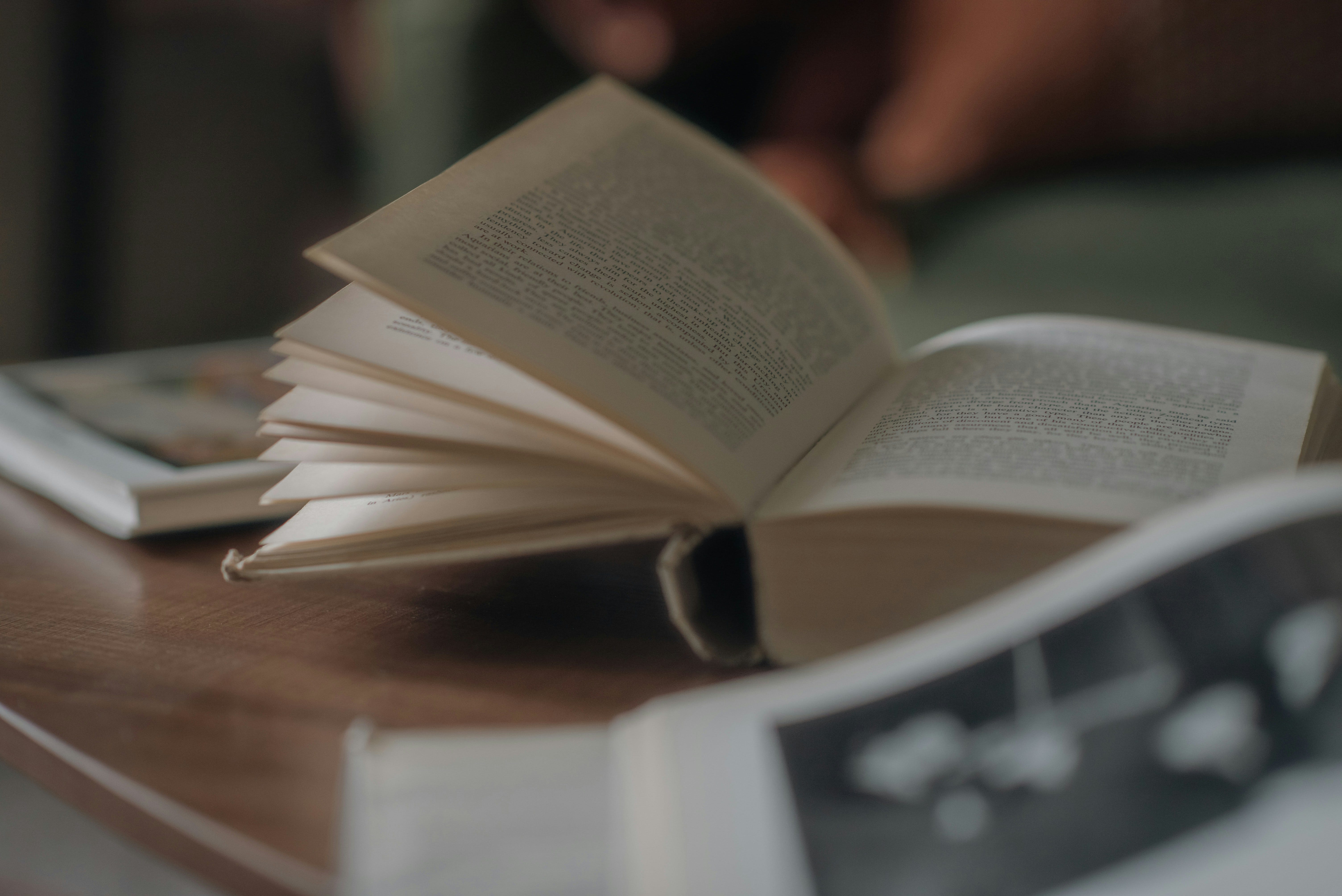
Except for one time when I was three years old and I bolted out of Story Hour in a full-throated scream, I’ve always been fond of libraries.
Since I was a young child, books have played an instrumental role in my life, transporting me to far-off lands, stretching my imagination, and helping me see there’s a whole world beyond my hometown.
I can still recall my favorite childhood reads: The Cat in the Hat. Green Eggs and Ham. The Magic School Bus. Old Bear. The Boxcar Children. Goosebumps. And when I was older: The Giver. The Catcher in the Rye. The Killer Angels. Ender’s Game. Jurassic Park. The Andromeda Strain.
All read multiple times. All hold a special place in my heart.
(Well, as much as you can be wistful about things like battlefield carnage, child prodigies committing interstellar war crimes, homicidal dinosaurs, and killer microorganisms.)
But in college, something changed — reading became a chore more than a joy. I was interested in too many other pursuits (i.e., partying) to slow down and read for pleasure. This trend worsened after I graduated, when my muscle disease symptoms manifested. When I read about my prognosis, I became so afraid that I stopped reading altogether. Instead, I lost myself in distractions, including work, watching sports, going to the bar, and playing video games. The less thinking I did, the better.
But once I moved out of the apartment I shared with my college buddies in late 2011, my former distractions lost their appeal. They were all less enjoyable without my friends. Alone at night, I suddenly had more hours in the day, and with nothing better to do, I started reading again, not just for pleasure, but also to learn.
It was the best thing that could have happened to me.
By this time, I was three years into my limb-girdle muscular dystrophy journey and was finally ready to confront my future once and for all. I devoured forums about my disease, read scientific papers, and studied genetics textbooks. But just as transformative, I reconnected with my former love of books. I still enjoyed history and sci-fi, but now also took an interest in psychology, technology, and religion.
Over time, reading — whether books, articles, newsletters, or anything else — became an essential part of my resilience toolkit. Now, it’s my favorite activity.
That’s what I’d like to explore today — why reading matters in hard times, and how to make it a meaningful part of your busy life. Along the way, I’ll share how it’s helped me on my journey and a few of my favorite tips.
Why reading is essential when you face adversity
1. Reading provides an escape.
When life stresses us out, it’s so easy to think about our myriad challenges and nothing else. A piece of fiction, an engaging nonfiction book, a travel magazine, a well-written essay — all of these can pull us out of our present predicament and give our minds a much-needed escape. Over time, this can boost our mental health and well-being.
2. Reading can change our perspective.
We can get so locked into a static, narrow view of our challenges that we lose sight of the big picture. Reading can shake us to our core, challenging our perspective and, many times, our whole worldview. This is a good thing.
Someone who’s persevered through adversity can show us how to reframe tough times in a more empowering light. A religious text or wisdom book can help us find meaning in our pain. A psychology book can teach us how to interpret — and tame — the negative thoughts swirling through our heads.
For me, Man’s Search for Meaning by Viktor Frankl was one such book. His experience surviving the Holocaust and finding meaning in unimaginable suffering helped me find meaning in my own. I try to read it at least once per year.
3. Reading makes what we face a little less scary.
So much fear comes from the unknown; the more informed you are about what you face, the more action you can take in response.
There is so much information available on the internet these days. For example, if you want to learn about a disease diagnosis, you can read primers about the underlying biology, scientific studies on treatment options, and forums to learn about how others are living with it.
When I finally confronted my disease and sought to learn as much as I could about it, I gained the confidence to fight back. I wasn’t running from it anymore, and I now had a better handle on how I could make a difference through fundraising and advocacy. That ultimately led me to work for the Muscular Dystrophy Association.
Being proactive doesn’t seem like much, but it makes a world of difference.
4. It reduces isolation.
Whether it’s a character we resonate with in a novel or someone we read about in an article who’s faced similar challenges, reading can make us feel less alone in the world.
Adversity is isolating. To know that someone, somewhere (even a character in a book) understands what we’re going through can be life-changing.
That happened when I read a profile of Pete Frates and his journey with ALS. Though my circumstances were very different, I related to the way his life changed suddenly and how he learned to adapt to declining mobility. He was also a Bostonian, which made his story feel even closer to home.
I also connected with Nora Seed, the fictional main character in The Midnight Library — someone who longed for a different life, only to discover that her imagined “better” lives weren’t so perfect. In the end, she learned to appreciate the life she already had.
Her story stays with me to this day.

8 Tips for Making the Most of Your Reading Experience
How do you build a reading practice that can help you in tough times?
Here’s what’s worked for me:
1. There’s a time and place for reading deeply, skimming, or summarizing using AI.
Some people skim everything and never read deeply. Others read deeply and never skim. I think both are effective strategies in different contexts. If you’re searching for a specific piece of information, skim. If you want an escape or to understand a subject on an intimate level, read deeply.
And if you’re reading something full of jargon, or that’s long and boring, it’s okay to summarize using AI. Paste the confusing passage or drop in a link and ask AI to explain it to you on a sixth-grade level. I do this all the time with scientific papers on my disease, which otherwise would be difficult to understand.
(Obligatory caveat that AI isn’t perfect and to always verify its answers.)
2. Have a strong information filter.
You don’t have to finish every book or read every article to the very end. Be discerning. It’s okay to abandon what you don’t enjoy or that isn’t useful.
The author Morgan Housel advocates for starting many books, giving them a few pages to pull you in, but being ruthless with abandoning them if they don’t interest you. Same for articles and newsletter posts. (Although not this one, hopefully!)
The goal isn’t to finish everything — it’s to uncover the few ideas that truly stick.
I do this all the time. In the past few months alone, I’ve started at least 20 books before finally settling on the one I’m reading now. If I hadn’t learned to cut bait, I might never have gotten to it.
3. Save important passages and review them as needed.
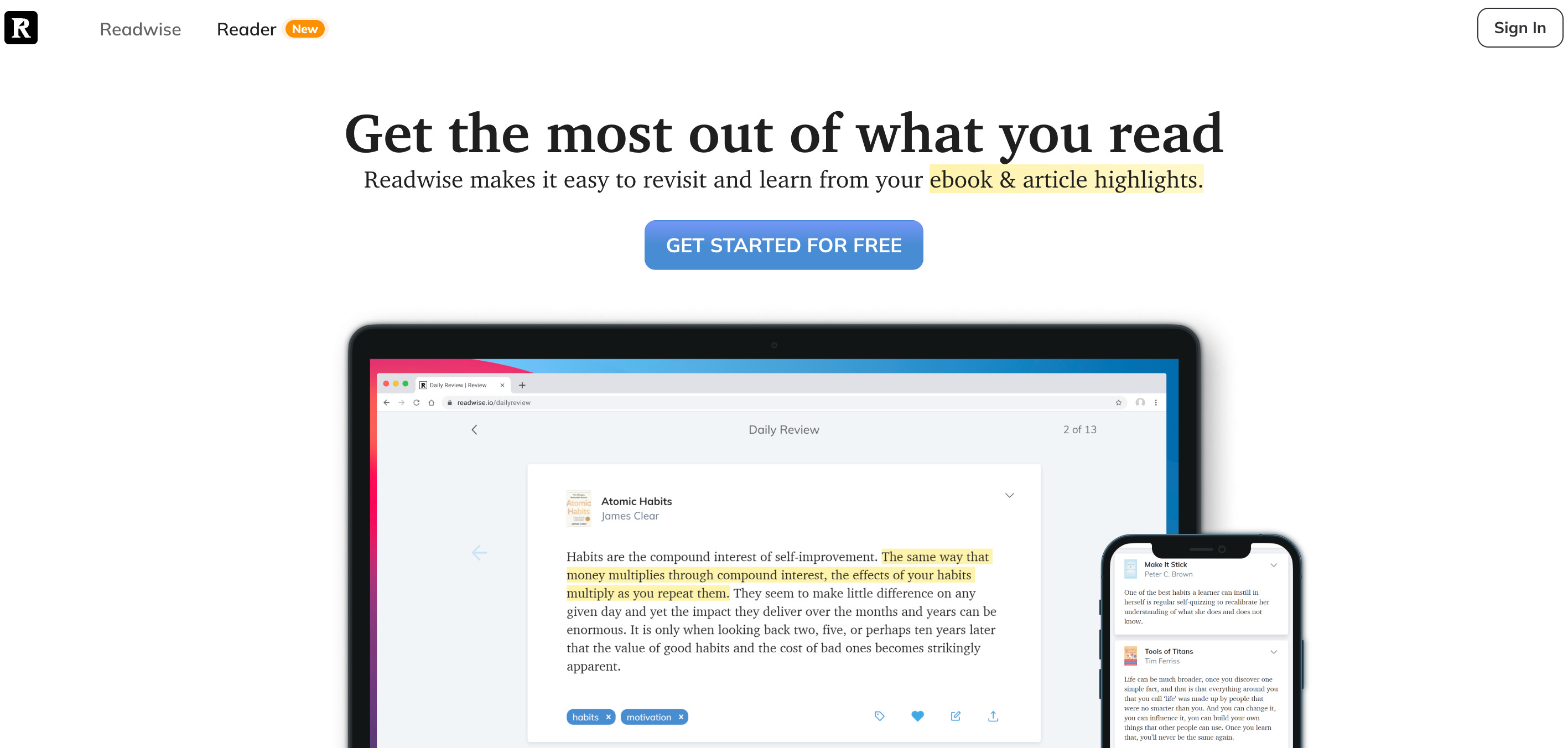
Quick author’s note: If you’d like to try Readwise — which I mention below — here is an affiliate link where you can receive it free for 60 days.
To be clear, Readwise has been such an instrumental part of my reading workflow that I’d recommend it even without the affiliate link! I love it that much.
I do most of my reading on my computer and Kindle, so I’m a big fan of highlighting passages. Readwise — an app that helps you remember what you read — automatically imports my Kindle highlights and saves them in one place. I then receive a daily email with ten highlights selected at random so I can review the material regularly. This helps me remember key pieces of information I’ve saved over the years.
For articles, Readwise offers a free Readwise Highlighter Chrome browser extension, which lets me highlight passages from articles I read online. This same extension also allows me to save articles for later, which I can then access using their Reader app.
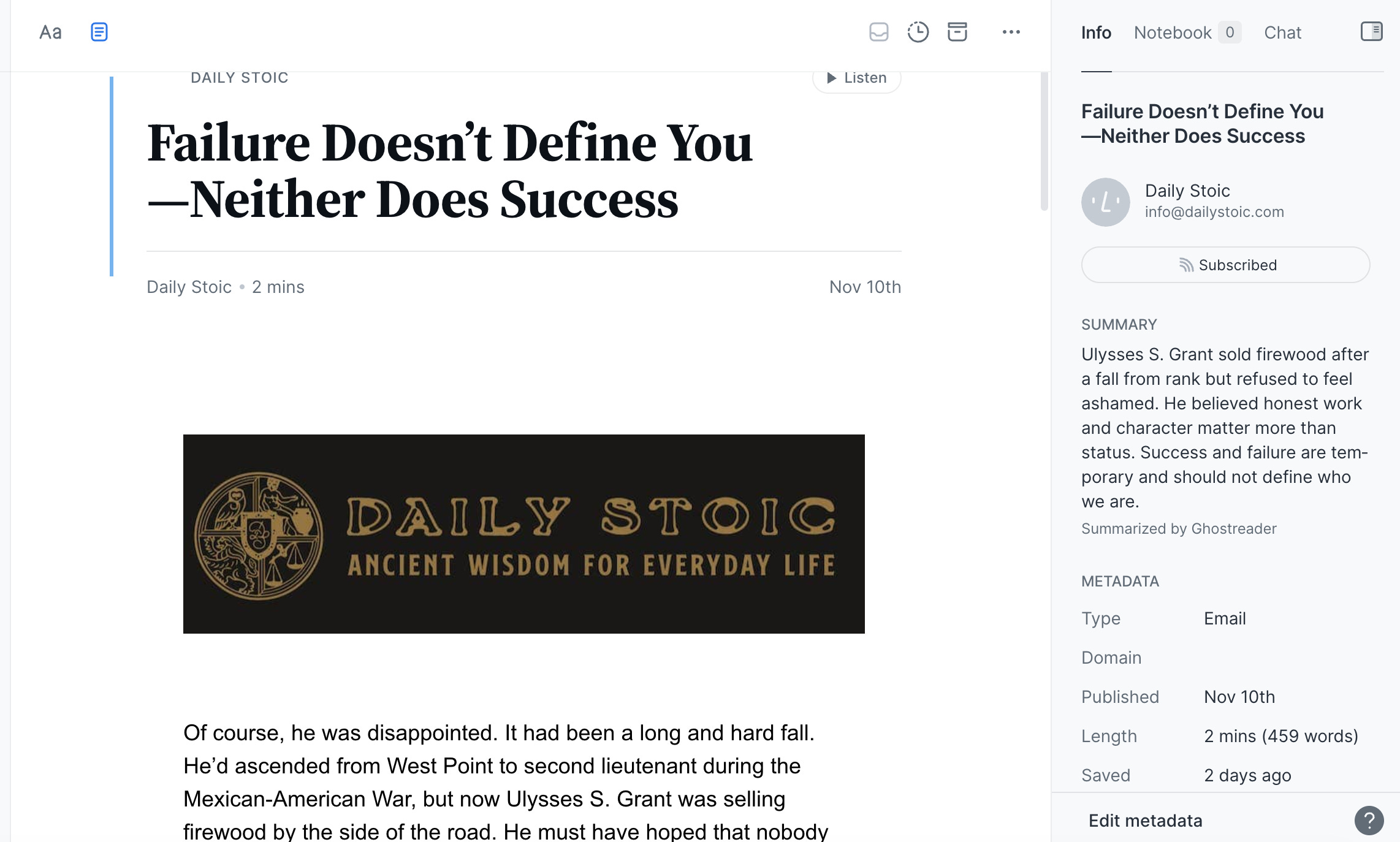
And to find specific quotes and passages I need, Readwise also has a handy Chat feature that lets me query saved highlights. For example, when I ask it, “Find me passages on the Second Arrow”, it pulls up any highlights related to the concept, which I can then click into to see exactly what book or article they came from.
To recap, because it can get confusing:
Readwise - Collects your highlights from Kindle, articles, and PDFs, then resurfaces them through daily reviews so you remember what you read. Demo
Readwise Highlighter - A browser extension that lets you highlight and save passages directly from web articles into your Readwise library.
Readwise Reader - Stores your saved articles, PDFs, emails, and RSS feeds to read later. Demo
Readwise Chat - An AI assistant that lets you search, summarize, or ask questions about anything in your reading library. Demo
This is not to say there aren’t other apps and workflows that can accomplish similar tasks, but this is what works best for me. What matters is that you have a process for saving reading material and reviewing it regularly.
4. Use AI to help you find relevant information.
Far from being the death knell of reading, AI can help make the process of discovery and learning much more efficient.
If you want to discover articles on disease-specific treatment advances, posts on emerging trends in the labor market, or books on processing grief, AI can help. I use Perplexity, which provides summaries with citations and pulls in real-time sources.
What used to take hours of searching now takes minutes, sometimes seconds.
5. Let serendipity guide you.
When life is hard, it’s easy to get tunnel vision and read only about your specific challenge. As I mentioned earlier, this is precisely why it’s important to let reading be an escape.
This escape can be structured — a book you want to read, an article you saved — or it can be serendipitous too.
For example, if something leads me down a rabbit hole, I follow it. (Recent rabbit holes include bitcoin and the 1988 World Series.) If I want to read something outside my normal routine, I let Readwise Reader pick a random article for me. And if I see an interesting post on LinkedIn about something that interests me, I read it. Just the other day, I found this amazing news clip from Good Morning America about a new exoskeleton and spent the next half hour reading up on the technology.
You never know where serendipity might lead. You might learn about a new interest, find a new role model, or solve a problem by reading something in a completely unrelated field.
6. Don’t just be a consumer. Put what you read to use.
As someone who writes about adversity all the time, I pull in a lot of information. But at some point, if I don’t put this information to good use and practice these strategies, I become an information hoarder. Information is only as good as putting it into practice or sharing it with others.
7. If you can’t read, listen.
Almost any article or book can be converted into audio form. Even this article can be read with an AI voice in the Substack app! Although I enjoy reading the most, I do listen to the occasional audiobook, too.
What ultimately matters is absorbing the words, not how they’re consumed.
8. Reading makes it more likely that you’ll write.
By reading others’ stories, you’re more likely to share your own. And by writing about what you’ve read on a given topic, you don’t just help others, you crystallize what you’ve learned.
Case in point: many of the strategies I share in this newsletter are the result of something I’ve read.
Reading is fundamental
The world is moving fast. Technology evolves every day, and it sometimes feels like there’s no place in the world for the written word.
But it’s not true. Videos are great, podcasts are great, but there will always be a place for reading.
If you’re in a tough spot right now and haven’t read in a while, start small. It can be one article, one chapter in a book, or one magazine column. Once you start, it’s much easier to continue.
Reading helped me find my way back to myself. Let it do the same for you.

I want to hear from you!
What are your favorite reading tips? Let me know in the comments.
“When Success Isn’t Enough”
Dr. Eboni L. Truss is the Founder of the Un-Becoming Movement, where she helps high-achieving professionals reconnect with themselves after years of chasing someone else’s version of success.
Her work focuses on the internal adversity — the masks, misalignment, and secret discontent — that often lingers even after reaching major milestones.
Her 3-Step Guide, When Success Isn’t Enough, is a powerful tool for anyone who looks successful on paper but still feels dissatisfied and empty. With practical prompts and deep reflection, the guide will help you recalibrate and chart a new path forward. A path anchored in alignment, clarity, and authenticity.
Click here to get a free copy: https://gift.yourunbecoming.com/newsletter.
Thanks for your post about the power of reading. I live with Complex regional Pain Syndrome, and I'm often homebound. While my body is in NYC, my brain is in Ancient Greece--(for this week).
Without books I wouldn’t have made it through so many challenges. Thanks for highlighting the power of reading.